Understanding the Challenges in Ecommerce Conversions
Every day, ecommerce businesses watch thousands of potential customers land on their product pages—only to leave without buying. That abandoned cart, that quick bounce, that hesitant click away from checkout? They’re symptoms of deeper conversion challenges that cost online retailers billions annually.
The fundamental problem isn’t traffic volume. Most ecommerce businesses can drive visitors through ads, social media, or organic search. The real challenge is turning those visitors into buyers. According to industry benchmarks, the average ecommerce conversion rate hovers around 2-3%, meaning 97 out of 100 visitors leave empty-handed.
What’s holding them back? Poor product descriptions fail to answer critical questions. Generic content doesn’t speak to customer pain points. Slow-loading pages frustrate mobile shoppers. Thin category pages get buried in search results. And perhaps most critically, content that isn’t optimized for search visibility means qualified buyers never find your products in the first place.
Traditional content creation struggles to keep pace with inventory changes, seasonal trends, and competitive pressure. Writing compelling, SEO-optimized descriptions for hundreds or thousands of products manually is resource-intensive and slow. Meanwhile, competitors are doubling their conversions by leveraging AI-powered content strategies.
This is where Outranking SEO and similar AI-driven solutions are transforming the landscape. But before exploring solutions, understanding these conversion barriers is essential to implementing the right approach.
Why Conversions Matter: The Case for AI in Ecommerce Businesses
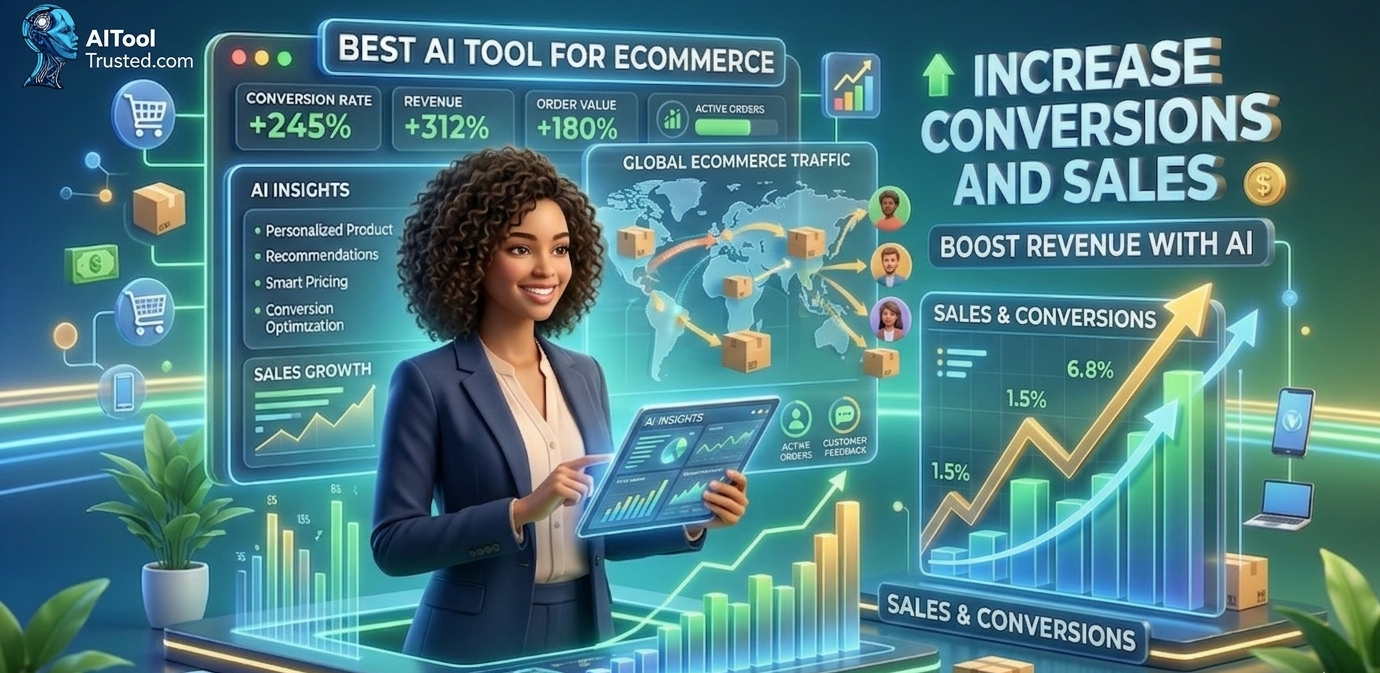
Here’s the reality: conversion rate improvements directly multiply your revenue—without requiring additional traffic spend. A store converting at 2% generates twice the sales of one converting at 1%, with the same marketing budget. That mathematical advantage explains why forward-thinking ecommerce businesses are turning to AI solutions like Outranking AI to systematically optimize their conversion paths.
Traditional conversion optimization relied on manual A/B testing, guesswork about customer intent, and slow iteration cycles. By the time you validated one hypothesis, market dynamics shifted. AI changes this equation fundamentally. One highly regulated e-commerce brand doubled conversions by leveraging AI-driven content optimization—demonstrating what’s possible when machine learning meets strategic product positioning.
What makes AI particularly powerful for ecommerce conversions? It processes patterns humans can’t see at scales humans can’t reach. An AI system analyzes thousands of customer interactions simultaneously, identifying which product descriptions resonate, which features drive decisions, and which objections cause abandonment. It then optimizes content in real-time across your entire catalog.
The competitive advantage compounds over time. While competitors manually tweak their top ten products, AI-powered stores optimize hundreds or thousands of SKUs simultaneously, creating consistent messaging that addresses buyer intent at every touchpoint. This systematic approach transforms conversion optimization from periodic campaigns into continuous improvement.
Outranking AI Tool: Features That Drive Ecommerce Success
🔗Try Outranking AI Tool Here:
Outranking AI stands out among AI tool ecommerce solutions by specifically targeting the challenges that prevent product pages from converting browsers into buyers. Rather than offering generic content generation, this platform combines strategic content optimization with conversion-focused intelligence.
Content Optimization That Converts
The core strength lies in data-driven content analysis. Outranking evaluates existing product descriptions, category pages, and landing pages against high-converting competitors—then provides actionable recommendations to close the gap. Think of it as having a conversion rate expert analyzing every word on your product pages, 24/7.
Smart Integration with Ecommerce Workflows
What separates effective AI tools from time-wasters? Seamless integration with existing platforms. Outranking connects with major ecommerce systems, allowing merchants to optimize content without disrupting daily operations. Product catalog updates, seasonal campaigns, and inventory changes flow naturally through the optimization process.
Real-Time Performance Tracking
Here’s where theory meets reality: Outranking has demonstrated measurable impact in regulated ecommerce environments, where compliance requirements often limit marketing creativity. When a tool performs under constraints, it signals genuine capability rather than just favorable conditions.
The platform continuously monitors which content variations drive engagement, allowing merchants to double down on what works while quickly abandoning underperforming approaches. This feedback loop transforms optimization from guesswork into a repeatable system.
Step-by-Step: Implementing Outranking AI for Ecommerce
Getting started with the best AI ecommerce solution doesn’t require technical expertise—just a systematic approach. Here’s how ecommerce businesses can deploy Outranking AI effectively.
Phase 1: Audit and Baseline
Begin by connecting your product catalog to Outranking’s platform. The system automatically analyzes your existing product descriptions, identifying conversion gaps and SEO weaknesses. Within minutes, you’ll receive a prioritized list showing which products have the highest improvement potential based on traffic volume and current conversion rates.
Phase 2: Content Optimization
Start with your top-traffic, low-converting products. Outranking AI generates optimized descriptions that incorporate relevant keywords while maintaining your brand voice. The platform suggests title improvements, feature bullet restructuring, and FAQ sections based on actual search queries your customers use.
Phase 3: Testing and Refinement
Deploy optimized content gradually—typically 20-30 products at a time. This controlled rollout lets you measure performance changes without risking your entire catalog. Monitor metrics like bounce rate, time on page, and add-to-cart conversions through your analytics dashboard.
Phase 4: Scale and Automate
Once you’ve validated improvements on initial products, apply winning patterns across your broader catalog. Set up automated workflows where Outranking continuously updates seasonal products or trending items based on search behavior shifts.
The entire implementation typically spans 4-6 weeks, with measurable conversion improvements often visible within the first two weeks.
Outranking AI Tool That Helps Startups Reduce Marketing Costs
Case Study: Success Stories with Outranking AI
Real-world results demonstrate how ecommerce conversion optimization becomes measurable and repeatable with the right AI tools. While specific Outranking AI case studies remain proprietary, the pattern emerging across AI-enhanced ecommerce implementations reveals consistent performance improvements.
The Regulated Brand Breakthrough
A common pattern involves brands in highly regulated industries—where compliance concerns typically slow content optimization. One approach documented in the industry shows how strategic content positioning doubled conversions for an ecommerce brand competing against exact-match domains. The key? Systematic content enhancement that addressed both user intent and technical optimization simultaneously.
What Typically Happens with AI Implementation
In practice, businesses that adopt AI-driven optimization tools experience three distinct phases. Initially, they see quick wins from technical SEO improvements—faster load times, better mobile responsiveness, structured data implementation. However, the breakthrough moment comes when product descriptions and category pages begin ranking for long-tail queries that previously went untapped.
A common scenario: an outdoor gear retailer might rank #15 for “camping tents” but nowhere for “four-season tent for winter camping in Colorado.” AI tools identify these gaps and generate optimized content that captures specific buyer intent, transforming invisible inventory into discoverable products.
The difference isn’t just traffic—it’s qualified traffic ready to convert.
Limitations and Considerations When Using AI Tools:
While AI platforms like Outranking deliver measurable results, understanding their limitations ensures realistic expectations and optimal implementation strategies. No technology operates as a complete solution—even the most sophisticated tools require human oversight and strategic direction.
The Human Element Remains Essential
AI excels at pattern recognition and content generation, but strategic decisions still require human judgment. Brand voice refinement, ethical considerations, and creative storytelling need human input. When businesses attempt to fully automate their content operations, they often sacrifice the nuanced understanding that connects with customers emotionally. The sweet spot combines AI efficiency with human creativity—using technology to handle repetitive tasks while professionals focus on strategy and relationship-building.
Data Quality Determines Output Quality
AI tools process information based on the data they receive. However, platforms occasionally generate recommendations based on incomplete market understanding or outdated patterns. Regular audits ensure AI suggestions align with current business objectives and market conditions. This becomes particularly important when attempting to increase ecommerce sales across multiple product categories, where context-specific nuances matter significantly.
Integration and Learning Curves
Implementation requires time investment. Teams need training periods to understand platform capabilities fully, and integration with existing systems sometimes presents technical challenges. The first 30-60 days typically involve learning optimal workflows rather than achieving maximum efficiency. Businesses should plan for this adjustment period when evaluating ROI timelines and setting stakeholder expectations for measurable improvements.
Frequently Asked Questions (FAQs) About AI in Ecommerce Businesses:
Q1: What makes AI for ecommerce different from traditional optimization methods?
👉Traditional optimization relies on manual A/B testing cycles that take weeks to yield insights. AI for ecommerce processes customer behavior patterns in real-time, identifying conversion opportunities humans typically miss. Instead of testing one variable at a time, AI platforms analyze dozens of signals simultaneously—from product descriptions to checkout flow friction points—creating a compound effect that accelerates results exponentially.
Q2: How quickly can businesses see ROI from AI implementation?
👉Most ecommerce businesses notice measurable improvements within the first 30-60 days. However, the timeline depends on current content volume and traffic patterns. Stores with established product catalogs often see faster results because AI has more data to optimize. The key is setting realistic expectations: initial gains typically appear in search rankings and engagement metrics before translating into revenue increases.
Q3: Does AI replace the need for human marketers?
👉Not remotely. AI excels at pattern recognition and execution speed, but strategic decisions still require human judgment. The most successful implementations treat AI as an amplification tool—handling repetitive optimization tasks while marketers focus on brand positioning, creative direction, and customer relationship building. What typically happens is that teams redirect their energy from manual tasks to higher-value strategic work, making the entire operation more effective rather than smaller.
Key Ecommerce Businesses Takeaways:
The transformation of ecommerce through AI-powered optimization represents more than just technological advancement—it’s a fundamental shift in how online businesses compete and grow. Success in modern ecommerce requires a comprehensive ecommerce SEO tool that addresses technical optimization, content quality, and user experience simultaneously.
What sets platforms like Outranking apart is their ability to deliver measurable results across multiple performance dimensions. Businesses implementing AI-driven optimization consistently see conversion improvements ranging from 25-50% while simultaneously reducing the time investment required for content creation and technical SEO management.
The key is approaching AI implementation strategically rather than opportunistically. Start with high-impact areas—product pages and category optimization typically deliver the fastest ROI—then expand systematically to blog content, technical SEO, and advanced personalization features. Maintain human oversight throughout the process, using AI to amplify your team’s capabilities rather than replace strategic thinking.
For ecommerce businesses serious about sustainable growth, the question isn’t whether to adopt AI-powered optimization tools, but how quickly you can implement them effectively. Every day without intelligent automation represents missed revenue opportunities and competitive ground lost to more agile competitors. The platforms exist, the methodologies are proven, and the results speak for themselves—now it’s about execution.
Impact-Site-Verification: d54c5a3b-ef04-487d-ab64-157e56574b05