

Introduction to Frase AI for Bloggers:
Getting your blog posts to rank on Google feels like trying to solve a puzzle where the pieces keep changing shape. You’ve written brilliant content, but it sits on page three whilst less valuable posts somehow claim the top spots. The gap between creating content and ranking that content has never been wider—and bloggers need more than just good writing skills to bridge it.
Enter Frase, an AI-powered tool that’s transforming how content creators approach SEO. Rather than guessing what Google wants, Frase analyses the top-ranking pages for your target keywords and extracts the patterns that actually matter. It’s like having a research assistant who’s read every competing article and distilled the insights you need to outrank them.
What makes Frase particularly valuable for bloggers is its dual focus on both traditional search engine optimization and the emerging world of GEO (Generative Engine Optimization). As AI-powered search experiences reshape how readers discover content, you need tools that help you rank not just on Google, but also get cited by ChatGPT, Perplexity, and similar platforms.
The difference between ranking and languishing often comes down to understanding what your competition has that you don’t—and more importantly, what you can offer that they’ve missed. Frase makes that competitive intelligence accessible without requiring a degree in data science.
Before diving into the mechanics of using this tool, let’s establish exactly what you’ll need to get the most from it.
Essentials Before Using Frase AI:
Before you dive into Frase AI, there’s some groundwork worth laying. Think of it like preparing your kitchen before cooking—you wouldn’t start making bread without flour, yeast, and right? First
- you’ll need a clear topic in mind. Frase works best when you feed it a specific keyword or question your audience is searching for. Vague topics produce vague results, so get specific about what problem you’re solving for readers.
🔗Try Free Trial Here:
You’ll also want access to your blog’s analytics. Understanding which posts currently perform well (or don’t) gives you a baseline. Frase AI can optimise content, but knowing your starting point helps you measure the actual impact.
Don’t skip competitor research either. The tool analyses top-ranking pages, so having a mental map of your competition helps you interpret Frase’s suggestions more strategically. You’re not copying—you’re identifying patterns in what Google rewards.
Finally, budget about 30-60 minutes for your first project. Frase combines research and writing features, and while it speeds things up dramatically, learning the interface takes a moment. Rushing through your first attempt means missing features that could genuinely transform your workflow.
Get these elements sorted, and Frase becomes significantly more powerful than just another AI writing assistant.
How Frase AI Optimises Content for Google Rankings:
Here’s where Frase AI starts earning its keep as an AI SEO tool. Instead of guessing what Google wants to see, you’re working with actual data about what’s already ranking. Think of it like having a backstage pass to Google’s ranking algorithm—not literally, but close enough.
When you enter your target keyword, Frase analyses the top 20 results on Google and extracts patterns. It identifies which topics those articles cover, which headings they use, and which related terms appear most frequently. This isn’t opinion-based advice; it’s pattern recognition at scale. The tool essentially reverse-engineers what Google considers comprehensive coverage for your topic.
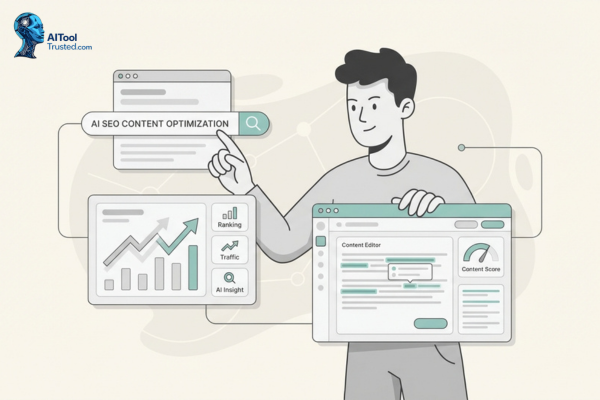
The magic happens in the content brief. Frase generates a topic score that measures how well your content matches these top-ranking patterns. You’ll see recommended headings, suggested keywords, and even statistics other articles mention. It’s like having a checklist that says, “If those ten articles all discuss X, Y, Z, and you probably should too.” What makes this particularly valuable is the specificity. Rather than vague advice like “write longer content,” you get actionable intel: “Top articles mention these five subtopics” or “Include these semantic keywords naturally.” You’re not blindly following SEO myths—you’re aligning with proven patterns whilst maintaining your unique voice and expertise.
How I Use This AI Tool to Create SEO-Optimized Content That Ranks on Google (Using the Optimize Existing Method)
Step-by-Step: Using Frase AI to Create a SEO-Optimised Blog Post:
Right—let’s walk through the actual process. You’re not just opening Frase AI and hoping for magic. There’s a method here, and once you get the hang of it, the workflow becomes second nature.
Start by creating a new document inside Frase. You’ll paste in your target keyword—say, “best running shoes for beginners.” Frase then analyses the top 20 pages that currently rank on Google for that term. Within seconds, you’ve got a research brief showing which topics those pages cover, what questions they answer, and how they’re structured.
Next, head to the outline builder. This is where you decide what your post will actually say. Frase suggests headings based on competitor content, but you’re not locked in—you can rearrange, delete, or add your own. Think of it like scaffolding: you’re deciding where each beam goes before you start building.
Now comes the writing. Frase’s AI Writer can generate paragraphs on demand, but here’s the thing: you’re still in control. Use it to draft tricky sections or speed up repetitive bits, then edit for your voice. Meanwhile, the content score sits in the sidebar, nudging you when you’ve missed key terms or skipped over important subtopics.
Finally, review the whole thing. Does it flow? Does it answer the reader’s question properly? If the content score’s in the green and your instincts say it’s solid, you’re ready to publish—and watch how Frase AI helps bloggers turn research into rankings.
How I Use This AI Tool to Create SEO-Optimized Content That Ranks on Google (Using Generate Article Method)
Example Scenarios: Blogging Success with Frase AI
Right—theory’s all well and good, but let’s see Frase AI in action with real scenarios where bloggers actually need help.
Scenario One: The Lifestyle Blogger Competing for “Best Coffee Makers”
You’re a lifestyle blogger tackling a competitive keyword. You plug “best coffee makers 2025” into Frase, and it surfaces what high-ranking competitors are covering: brew temperature specs, machine longevity, specific brand comparisons. You weren’t planning to mention thermal carafes or programmable timers—now you are. Your SEO optimization game just levelled up because you’re matching the content depth Google’s already rewarding.
Scenario Two: The SaaS Blogger Writing Product Comparisons
You’re comparing project management tools. Frase’s SERP analysis shows competing articles dedicate 300+ words to pricing breakdowns and feature matrices. You were planning a quick overview. Not anymore. The tool flags missing semantic clusters around “team collaboration features” and “integration capabilities”—terms you’d glossed over but competitors hadn’t.
What typically happens here is bloggers discover they’ve been writing around the topic instead of into it. Frase AI doesn’t just highlight gaps—it shows you the specific angles that already work in the SERPs. You’re not reinventing the wheel; you’re building a better one with the blueprint sitting right there in the tool.
Limitations and Considerations When Using Frase AI:
Right—Frase AI isn’t a magic wand. It’s brilliant for content optimization, but there are real limitations you need to understand before expecting miracles.
First off, Frase can’t write original expertise. It analyses top-ranking content and suggests patterns, but if your niche demands unique insights—say, you’re a veterinary surgeon writing about complex procedures—the tool won’t inject your specific knowledge. An honest Frase AI review for 2025 notes this plainly: the AI generates structurally sound content, but depth requires human intervention.
Then there’s the cost factor. Monthly subscriptions start around $15 but scale quickly if you’re churning out multiple articles weekly. For hobby bloggers or those testing the waters, that’s a consideration.
There’s also the learning curve. Yes, Frase is intuitive, but mastering its brief builder, understanding topic scores, and knowing when to override AI suggestions? That takes time. You can’t just click “generate” and walk away—Frase review from Embarque.io emphasises that strategic thinking still matters.
Finally, Frase optimises for patterns, not creativity. If every blogger follows identical outlines, content becomes homogeneous. Google rewards uniqueness alongside relevance—so use Frase as scaffolding, not scripture.
Translation? Frase accelerates research and structure. It doesn’t replace judgment, originality, or your distinct voice. Tools assist; humans decide.
Frequently Asked Questions(FAQs) About Frase AI
Q1: What’s the difference between Frase’s content brief and the actual writing?
👉AI content briefs in Frase analyse what’s already ranking—giving you topic clusters, key questions, and statistics competitors use. Think of the brief as your research assistant gathering intelligence. The writing tool then helps you act on that intelligence, generating drafts based on the brief’s findings. You don’t need to use both features together, but they complement each other brilliantly when you do.
Q2: Can Frase replace a human SEO strategist?
👉Not entirely. Frase automates the grunt work—competitor analysis, keyword mapping, content scoring—but strategic decisions still need human judgement. Which topics align with your brand voice? What angle will resonate with your specific audience? The tool surfaces opportunities; you decide which ones matter.
Q3: Does Frase work for non-English content?
👉Officially, Frase supports multiple languages, but its content optimization features perform best with English queries since most competitor data comes from English-language SERPs. If you’re blogging in German or Spanish, expect less robust topic suggestions. The writing assistant handles other languages reasonably, though nuance suffers compared to English.
Q4: How often should I refresh my Frase research?
👉Every three to six months for evergreen content—or immediately if you notice ranking drops. Search intent shifts; new competitors emerge. Running fresh analyses keeps your content aligned with what’s currently working in your niche.
Key Takeaways:
Right—let’s crystallise what actually matters for bloggers looking to rank with Frase AI.
Frase transforms content optimisation from guesswork into a data-driven workflow. Instead of wondering what Google wants, you’re literally seeing what’s already working—through SERP analysis that breaks down competitors’ strategies into actionable insights. The platform gives you content briefs, outline suggestions, and optimisation scores that guide you toward better rankings without needing an SEO degree.
The game-changer? It’s the combination of AI writing assistance with real competitive intelligence. You’re not just creating content—you’re creating content that’s calibrated to outrank what’s currently sitting in positions 1-10. The Topic Score and optimisation panel keep you honest about whether you’ve actually covered what searchers need.
Here’s what it comes down to: Frase won’t replace your expertise or unique perspective. What it will do is eliminate the tedious research phase, highlight gaps you’d otherwise miss, and speed up the entire process from keyword to publish. For bloggers serious about visibility, that efficiency translates directly into more rankings, more traffic, and ultimately—more time to focus on the creative work that actually builds audiences.
Start with one underperforming post. Run it through Frase’s optimisation. Watch what happens.